In this context, soft drinks such as wine and beer are an alternative to continue sharing convivial moments.
But do they have the same taste and texture as traditional drinks?
Lou, sommelier at the Caves du Louvre, is skeptical about this innovation and the result obtained. According to her, alcohol-free wine does not have the same taste or structure as a classic wine. The evaporation process, which occurs after fermentation, changes the balance of the wine, removes richness in the mouth and can reduce its aromatic complexity. According to Justan, head sommelier at Les Caves du Louvre, making a good wine similar to the traditional recipe is very expensive. That is why few domains today manage to produce a similar alternative.
Making non-alcoholic wine is expensive because it is first and foremost a real wine, made like any other, from which the alcohol is then removed using complex technical processes. Vacuum distillation, reverse osmosis or equivalent technologies require expensive equipment, a lot of energy and real know-how to preserve aromas. Added to this are volume losses, lower returns, and an important phase of research and adjustment, as the market remains young. The result: alcohol-free wine is not a simplified wine, but a wine that is technically more demanding.
It is easier to make non-alcoholic beer than non-alcoholic wine, because alcohol does not play the same role in it. In beer, the taste is mainly based on hops, grains and gas, which makes it possible to reduce or avoid alcohol during fermentation without unbalancing the product. In wine, on the other hand, alcohol is a central element in structure, texture and aromas: removing it afterwards is technically complex and much more delicate.
Some iconic drinks explore these trends, such as Chartreuse d'Isère. Indeed, the Henri-Marie artisanal distillery has developed a refreshing vegetable drink in collaboration with the Michelin-starred chef, Édouard Loubet.
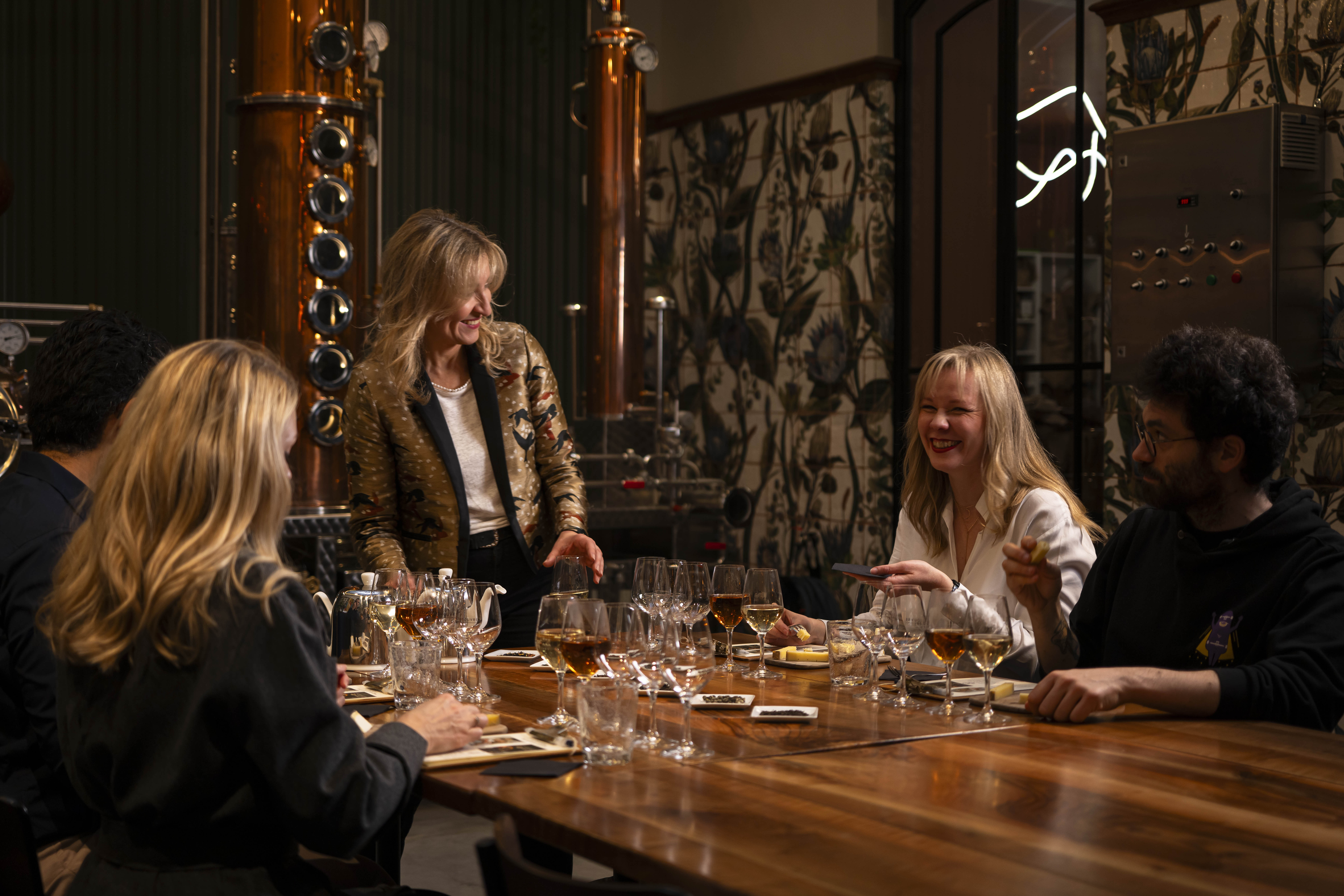
Faced with this boom in non-alcoholic drinks, the Group Edonist offers new experiences. To the Distillerie de l'Arbre Sec, of tea workshops are now offered. For its part, the La Cave du Paradis also recommends tea alternatives such as Jasbire white tea, Kagoshima green tea or even Meung black tea, allowing you to drink a drink even during Dry January.
After all, everyone has their own pace: some take it easy and others prefer to start Dry January in February!